Invoicing
Invoicing is a product inside the product. Most customers already invoice somewhere else, so the job was less about features and more about trust.

Overview
I helped build Qonto's invoicing tool from scratch when I joined, in mid-2022. It turns billing into a simple experience inside the business account.
Most customers already invoice somewhere else, whether that is Word, Excel or another tool. Getting them to switch is not really a feature problem. It is a trust problem. Over two years, content design moved invoicing from explaining what the product does to answering the questions that stop people from switching.
Context
Invoicing lives inside the account, next to transactions and payments. People create, send and track invoices without leaving Qonto. It has been available since July 2022, with a free tier since October 2024.
- 6
- markets
- 6
- languages
- 29
- currencies
Invoicing runs in France, Germany, Spain, Italy, Austria and the Netherlands, with e-invoicing compliance in France, Italy and Germany. Tens of thousands of organisations see the invoicing empty state every month.
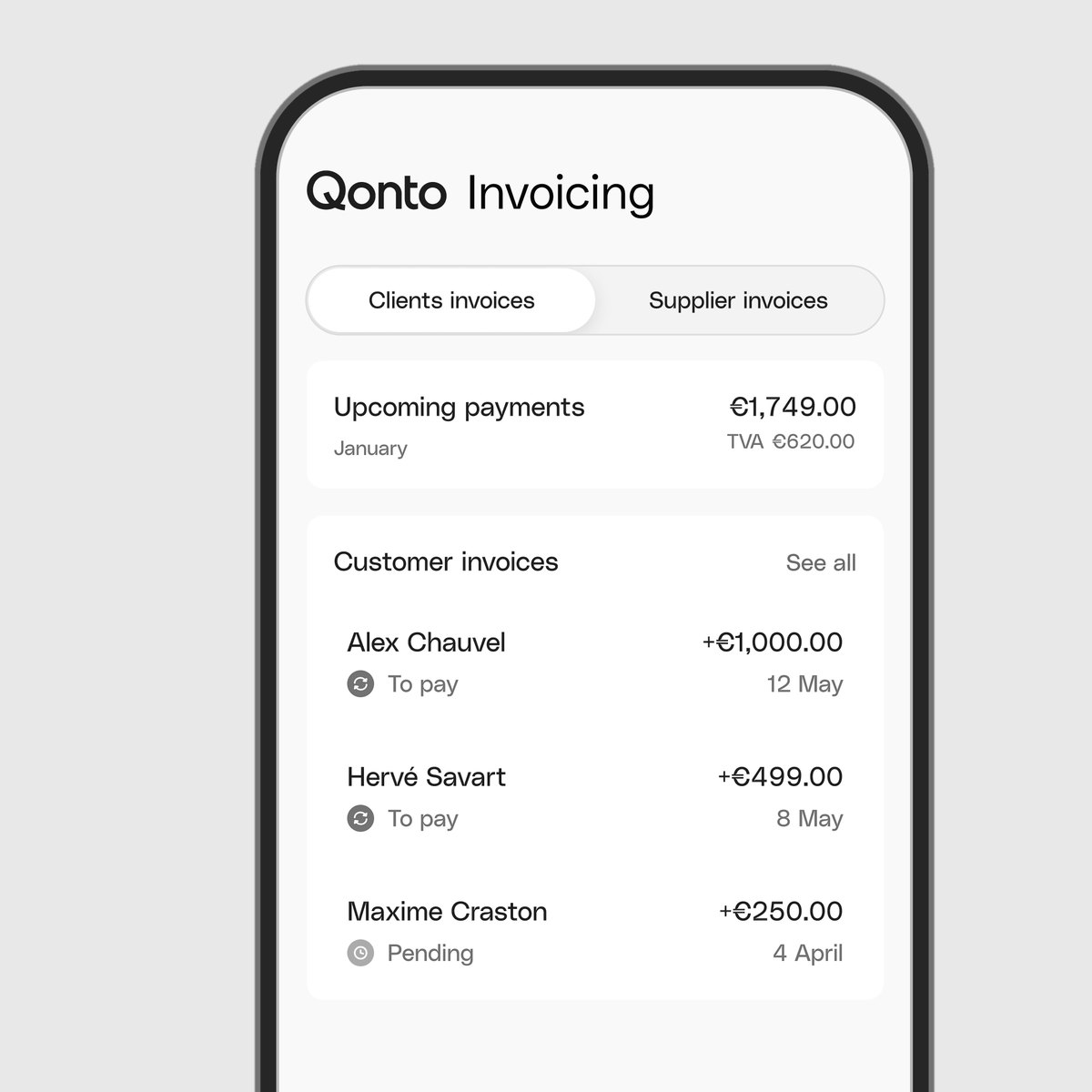
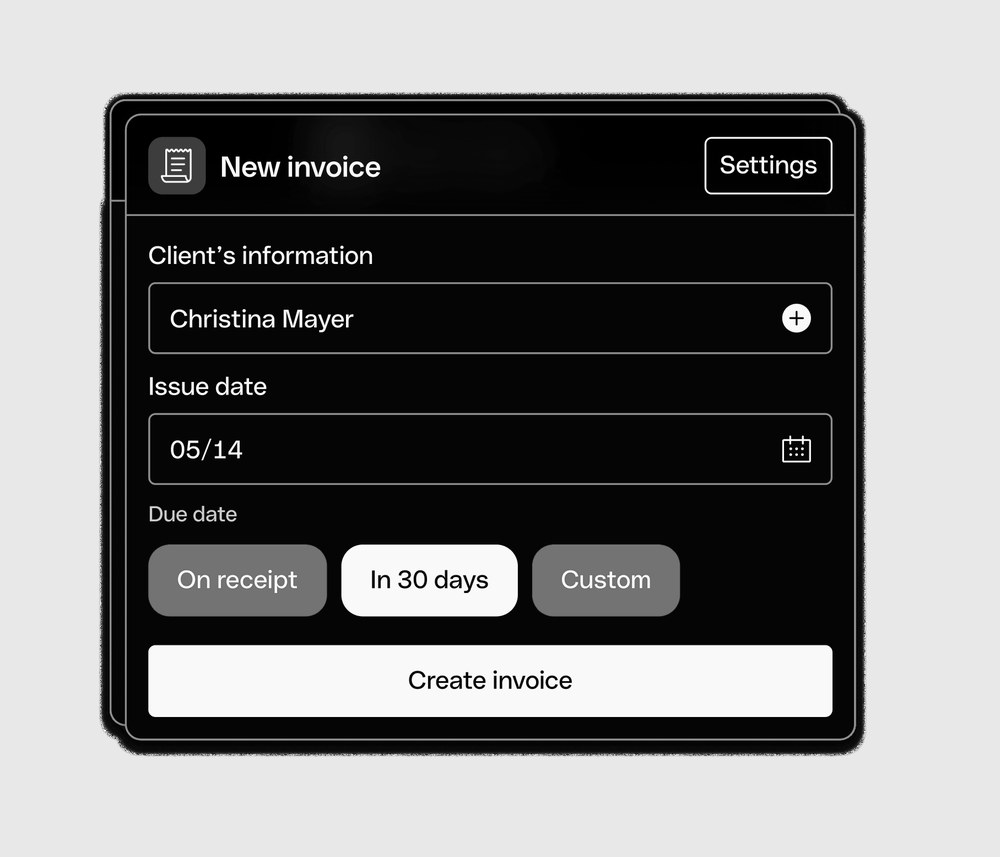
Product images from qonto.com/en/invoicing
My role
I led the content strategy, the hierarchy and the terminology. I worked with product management, product design, localization specialists, and frontend, backend and mobile engineers.
The content challenge
In 2024, very few people were using invoicing. Many of those who landed on the empty invoicing page started an invoice, but almost none finished one. Research showed why. People wanted to see the product before committing, and they worried about doing something they could not undo.
They told us, in their own way, that they look at demos when they choose invoicing software, and that an empty page showed them nothing.
The barriers were clear. People did not know which legal mentions an invoice needs. They were afraid of sending an invoice to a client by accident. And they worried about breaking the sequential numbering their accountant relies on.
So we reframed the empty state. Instead of a functional "create an invoice" prompt, it told a story built on something Qonto really has: your bank account and your invoicing in one place. We turned down a "get paid 10x faster" angle because the product could not back that claim up yet. Then we ran an A/B/C test: the current page, a new design with the old message, and a new design with the new message, so we could see how much of the effect came from the words.
From persuading to reassuring
By 2026 the audience had changed. A large share of Qonto customers are established businesses that already invoice elsewhere. They do not need to learn how to invoice. They need to know they can bring their history, clients and numbering with them. In research, the old fear came back, this time as a reason not to switch. One business owner told us the numbers had to carry on in sequence, and that this alone had stopped them.
The new migration empty state is written around those barriers: keeping your invoice numbering, flexible layouts, and compliant e-invoicing. It has three focused benefits and an FAQ, and two clear paths, create or upload. In testing, the content was what people noticed. Several participants read the numbering answer aloud without being prompted, and most preferred the new version.
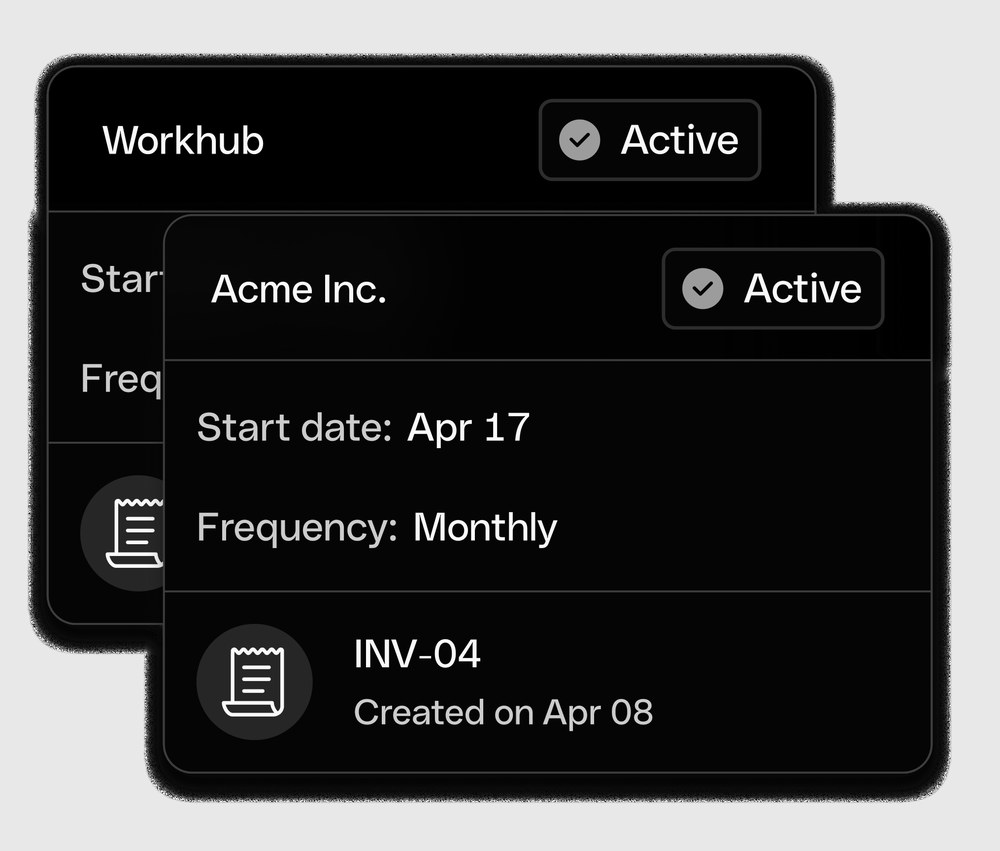
Product images from qonto.com/en/invoicing
Before AI
Before AI, content design on invoicing ran on workshops and handoffs. Copy went into Figma, Lokalise keys were tracked in shared spreadsheets, and translations were checked by eye in each locale. Fixing a live typo meant waiting for an engineer.
Today the team audits every instance of a string across the codebase with Claude Code, checks the new copy against the design system with a dedicated agent, and ships the fix through an automated Lokalise pull request. For simple web fixes, an express lane goes from brief to merged code in under an hour. The first fix through it was a missing Spanish accent in a currency name used in invoicing. Before anything merges, translation QA runs dozens of automated checks across all locales. AI speeds up the mechanics. Content designers still decide what the copy should say.
Outcome
The new empty state drove a double-digit lift in clicks. Content was one of the factors, not the only one.
The new empty state shipped alongside a new onboarding flow, so the effect of the words alone is hard to isolate. A banner shown right after someone attaches an invoice to a transaction did better still: its click-through rate was several times higher than the same message shown generically.
The 2026 migration experience is live, with an in-context entry point for the many thousands of users a month who attach invoices to incoming payments by hand. The read on it is early and qualitative, so we are still learning how much it moves.
People do not need to learn how to invoice. They need to know they can bring their numbering with them.
The same fear showed up two years apart, in a different audience. The content that worked was the one that answered it directly.